














Banning Online Games in India: Economic Suicide That Fails to Curb Addiction
India’s proposed 2025 ban on real-money gaming could destroy a $3.7B industry, wipe out jobs, and fuel black markets. Regulation, not prohibition, is the smarter solution to curb addiction and protect players.

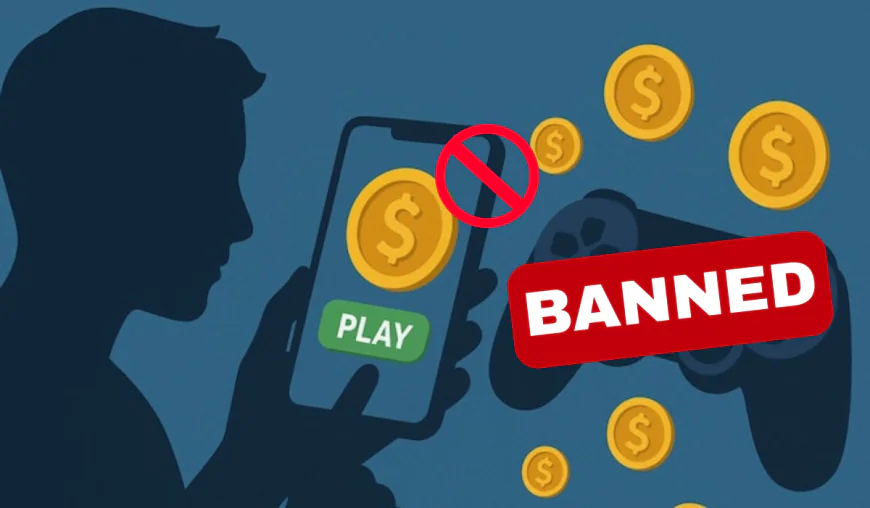
Banning Online Games in India:- A proposed 2025 blanket ban on real-money gaming (RMG) in India risks destroying a booming digital economy, pushing players to offshore black markets, and repeating the historical failures of prohibition. Instead of regulation and innovation, the government seems intent on choosing the blunt instrument of bans—an approach proven ineffective worldwide.
Why Bans Fail: A Lesson from History
Prohibitions often assume that making something illegal will erase demand. History shows otherwise. From alcohol prohibition in the United States to failed drug bans in India, demand only shifts underground.
Neuroscience explains this: gambling, like other risk-reward behaviors, triggers dopamine surges in the brain, making it addictive and difficult to eradicate. From Roman dice games to medieval wagers and even mythological tales of Yudhisthir, betting is embedded in human culture.
Whenever governments ban an activity, black markets rise. Porn restrictions fuel VPN use, drug bans create trafficking networks, and liquor bans encourage hooch tragedies. The same cycle now threatens India’s online gaming industry.
India’s Gaming Ban: A Self-Inflicted Economic Blow
India’s real-money gaming sector is worth $3.7 billion (AIGF, 2024) and employs over 200,000 professionals across IT, AI, design, and content development. More than 2,000 startups have emerged in the space, attracting ₹23,000–25,000 crore in FDI over five years.
Far from being a tax haven, the industry already contributes significantly to government coffers—nearly ₹20,000 crore annually in GST and income tax.
A blanket ban would:
- Shut down 400+ companies overnight
- Eliminate thousands of jobs in India’s startup and tech ecosystem
- Wipe out billions in legitimate tax revenue
- Push users to illegal offshore platforms, exposing them to fraud, money laundering, and even terror financing risks
In short, the ban is not just a moral overreach—it’s economic suicide.
Courts Have Already Rejected Such Bans
This is not India’s first attempt.
- Tamil Nadu (2020): A ban on online rummy and poker was struck down in 2021 by the Madras High Court as unconstitutional, violating the right to trade under Article 19(1)(g).
- Karnataka (2021): Its sweeping ban on online gaming met the same fate in 2022, with the High Court highlighting the government’s failure to distinguish between skill-based and chance-based games.
Despite these judgments, policymakers are once again walking into the same trap.
Addiction Is Real—But Bans Are Not the Cure
Yes, online gaming addiction is a real concern. But so are social media, e-commerce, and endless scrolling on short-video apps. Addiction is not a “moral crime” but a regulation failure.
Instead of being a “Big Daddy” imposing forced abstinence, the government should enable safeguards like:
- Age verification and parental controls
- Spending limits for minors and vulnerable users
- Mandatory warnings and cool-off periods
- Self-exclusion tools for addicted players
- Counselling and awareness campaigns
China’s experiment with restricting minors to three gaming hours per week only led to fake IDs, VPNs, and underground play. Addiction didn’t stop—it just moved elsewhere.
The Smarter Path: Regulate, Don’t Prohibit
Like the stock market, online gaming requires a dedicated regulator, not a blanket ban. A regulatory body could enforce responsible gaming measures, tax revenues effectively, and protect players while sustaining innovation.
Globally, regulation has worked better than prohibition. Countries with gaming regulators have balanced economic growth with player safety, while nations that tried bans ended up nurturing black markets.
Conclusion: Don’t Let the Game Slip Away
India has the opportunity to nurture a thriving digital gaming economy, creating jobs, driving innovation, and generating billions in revenue. A 2025 ban on real-money games would destroy all of this while failing to curb addiction.
Bans don’t stop the game—they just
hand victory to illegal operators. The smarter play is regulation, not prohibition.