Yes Bank Shares Crash 20% After SC Quashes AT1 Bond Write-Off
Yes Bank shares plunged 20% after Supreme Court upheld Bombay HC order quashing ₹8,415 crore AT1 bond write-off. What investors must know about the impact.
Harshita Choudhary Verified Public Figure • 30 Mar, 2026Chief Editor
Oct 15, 2026 • 4:54 PM 0
B
Business
NEWS CARD
“Yes Bank Shares Crash 20% After SC Quashes AT1 Bond Write-Off”
Read more onen.aiadda.in/s/9d38ca
15 Oct 2026
https://en.aiadda.in/s/9d38ca
Copied
Yes Bank Shares Crash 20% After SC Quashes AT1 Bond Write-Off
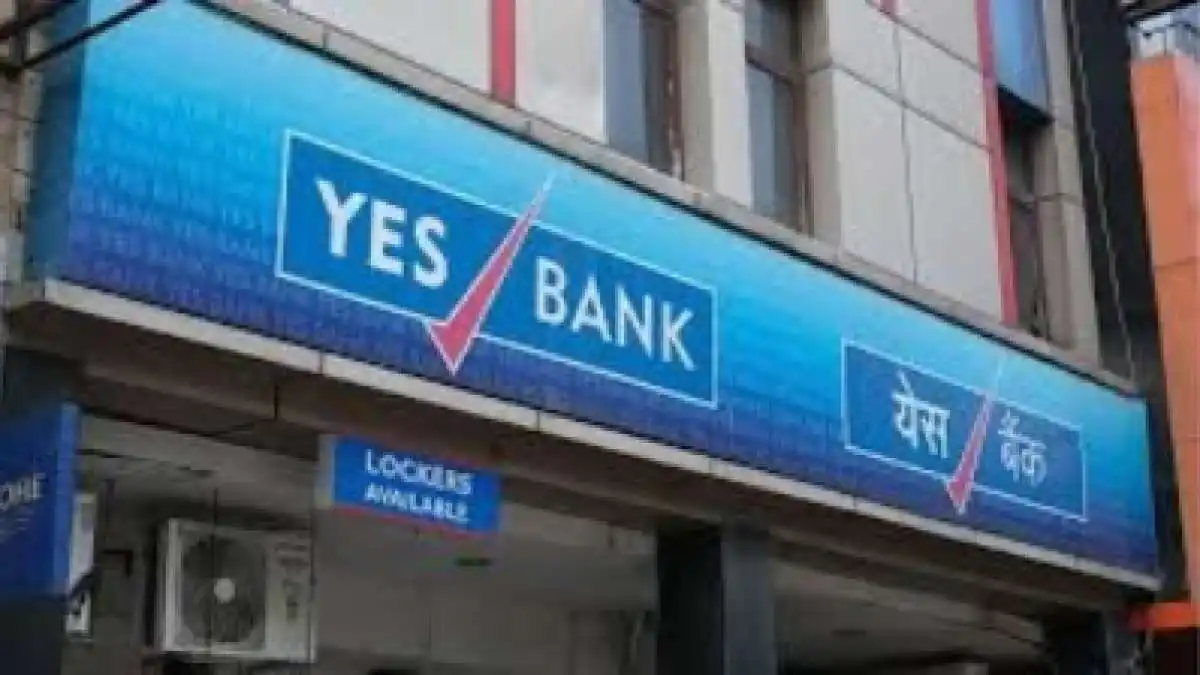
Yes Bank shares crashed sharply on Thursday, October 15, 2026, during intraday trading as investors reacted to the Supreme Court’s decision upholding the Bombay High Court order that quashed the lender’s write-off of Additional Tier-1 (AT1) bonds worth approximately ₹8,415 crore. The stock hit an intraday low of ₹16.96, down nearly 20% from the previous close of ₹21.20. Trading volumes surged past 622 million shares across the NSE and BSE combined, reflecting intense selling pressure.
The apex court’s ruling dismissed appeals filed by Yes Bank, the Reserve Bank of India (RBI), and the Central Government. A bench of Justices Dipankar Datta and Augustine George Masih held that there was no reason to interfere with the High Court’s January 2023 judgment. The decision has raised concerns about a significant potential liability for the bank while offering relief to bondholders.
Supreme Court Verdict and Key Observations
The Supreme Court examined the matter on merits and answered the core questions in the negative. The bench noted that the final reconstruction scheme for Yes Bank did not contain a specific provision authorising the write-off of the AT1 bonds. It further held that the RBI-appointed administrator lacked the authority to extinguish the bonds after the bank’s reconstruction, and that the action was not in consonance with the RBI Master Circular or the terms of the information memorandum of the bonds.
The dispute traces back to March 2020, when Yes Bank faced a severe financial crisis. The RBI imposed a moratorium, superseded the board, and placed the bank under an administrator. As part of the government-approved reconstruction scheme backed by capital infusion led by the State Bank of India, the administrator ordered a complete write-down of AT1 bonds totalling ₹8,415 crore to zero. These included ₹3,000 crore raised in December 2016 and ₹5,415 crore raised in October 2017, carrying coupon rates of 9.5% and 9% respectively.
Do you want to receive news updates on WhatsApp?
Get the latest and most reliable news updates instantly on WhatsApp. Join now and be the first to read every story.
The Bombay High Court had quashed the write-off in January 2023, ruling that the administrator exceeded his powers. The Supreme Court has now confirmed that finding and vacated the earlier stay on the High Court order.
Investors responded swiftly to the news. Yes Bank shares fell as much as 20% intraday before recovering partially to close around ₹18.12–₹18.15, still down more than 14%. Market capitalisation slipped to approximately ₹57,000 crore. The heavy volumes and sharp decline reflected market concerns that the bank may now face a substantial liability that it had previously written off.
Analysts note that the inability to write off these bonds removes a key loss-absorption mechanism that the bank had used during its crisis. This could create a negative liability on the balance sheet and potentially pressure capital adequacy ratios.
What Are AT1 Bonds and Why the Controversy?
Additional Tier-1 bonds are perpetual debt instruments issued by banks to strengthen their capital base under Basel III norms. They are designed to absorb losses when a bank’s capital falls below certain thresholds and can be written down or converted into equity under specified triggers.
In Yes Bank’s case, a large number of retail investors, including senior citizens, had purchased these bonds. Many later alleged that the instruments were mis-sold to them as relatively safe investments comparable to fixed deposits, without adequate disclosure of the risks. The 2020 write-off wiped out their entire principal, prompting legal challenges.
The High Court and now the Supreme Court have essentially ruled that the write-off was not supported by the final reconstruction scheme approved by the government, rendering the administrator’s action illegal and arbitrary.
Implications for the Bank and Its Shareholders
The ruling means Yes Bank may have to honour the bonds, including potential coupon payments at the original rates, or reach a settlement with bondholders. Experts suggest this could necessitate fresh capital raising, possibly through a rights issue or other means. Existing shareholders may bear the brunt of any financial impact, particularly if newer strategic investors such as Sumitomo Mitsui Banking Corporation (SMBC) are contractually protected from pre-investment liabilities.
The bank’s management is expected to provide clarity on the financial impact and the path forward. Stock exchanges have sought clarification from Yes Bank, and a board-level discussion on the matter is anticipated in the coming days.
Broader Lessons for Investors and the Banking Sector
This long-running case highlights the risks associated with AT1 bonds and the importance of clear contractual and regulatory provisions during bank resolution. It also underscores that high-yield instruments carry correspondingly higher risks and should not be treated as substitutes for safer fixed-income products.
BREAKING: Supreme Court strikes down Yes Bank's ₹8,415 crore AT1 bond write-off. Bench of Justices Dipankar Datta and Augustine George Masih upholds Bombay High Court's 2023 judgment, dismissing appeals by Yes Bank and others. https://t.co/ht3BtQRXuZ
— Bar and Bench (@barandbench) October 15, 2026
For the banking sector, the judgment reinforces the need for precision in reconstruction schemes and consistency with RBI guidelines. Future resolution frameworks may need tighter drafting to avoid similar disputes.
Conclusion: The Supreme Court’s decision marks a significant victory for AT1 bondholders and a setback for Yes Bank. While the exact financial implications will depend on how the judgment is implemented, the market has already priced in heightened uncertainty. Investors should closely monitor the bank’s capital plans and any official statements on the liability.
FAQ
Q1: Why did Yes Bank shares fall so sharply? The Supreme Court upheld the quashing of the ₹8,415 crore AT1 bond write-off, creating uncertainty over a potential large liability for the bank.
Q2: What are AT1 bonds? They are perpetual capital instruments issued by banks that can be written down to absorb losses during financial stress.
Q3: What happens to the bondholders now? Bondholders stand to benefit as the write-off has been held illegal. Recovery or reinstatement will depend on the detailed implementation of the judgment.
Q4: Will Yes Bank need to raise capital? It is possible. Experts believe the bank may need to strengthen its capital base to address the reinstated liability.
Q5: How does this affect newer investors like SMBC? If SMBC is shielded from pre-investment liabilities, the burden could fall more heavily on existing shareholders.