














India Stands Firm Against US Tariff Hike, Cites National Interests

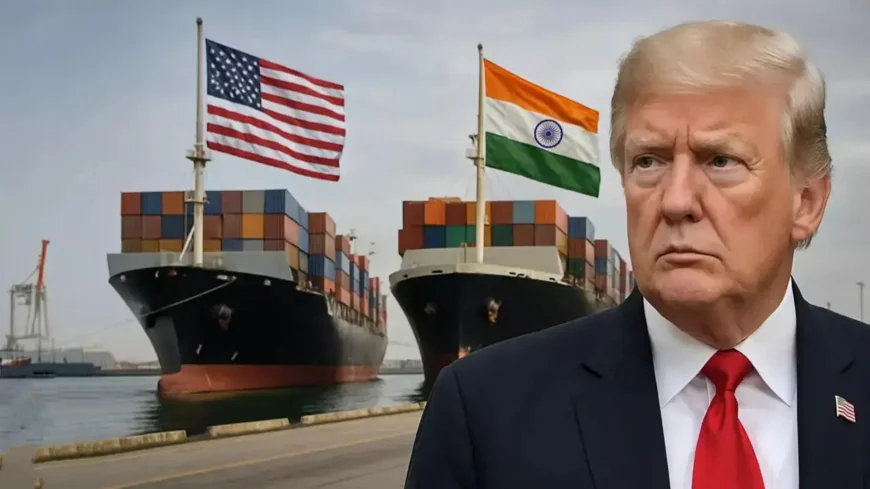
US President Donald Trump signed an executive order imposing an additional 25% tariff on Indian goods, raising the total tariff to 50% when combined with the existing 25% duty. Effective August 27, 2025, this measure targets India’s continued imports of Russian oil and military equipment, which Trump claims indirectly fuels Russia’s war in Ukraine. The move places India among the highest-tariffed nations in Asia, with duties 20% higher than those on China and 31% higher than on Pakistan. In response, India has firmly reiterated its commitment to protecting national interests, calling the tariffs “unfair, unjustified, and unreasonable” and vowing to take all necessary actions to safeguard its economic security.
India’s foreign ministry swiftly condemned the US action, emphasizing that the country’s energy decisions are driven by market factors and the need to ensure energy security for its 1.4 billion citizens. “It is extremely unfortunate that the US should choose to impose additional tariffs on India for actions that several other countries are also taking in their own national interest,” the ministry stated. It highlighted that the US had previously encouraged Russian oil imports early in the Ukraine conflict to stabilize global energy markets, making the current targeting of India inconsistent and unwarranted. The statement underscored India’s resolve to protect its economic and strategic priorities, signaling a robust yet measured pushback.
Earlier this month, when the initial 25% tariff was announced, India indicated it was studying the implications while remaining committed to securing a fair trade deal. The foreign ministry had pointed out that India is not alone in importing Russian goods, noting that Europe and the US continue to engage in trade with Russia in sectors like energy, fertilizers, chemicals, and uranium for nuclear industries. “The targeting of India is unjustified and unreasonable,” the ministry had declared, emphasizing that India, like any major economy, would take necessary measures to safeguard its interests.
President Trump, however, has remained steadfast in his stance, singling out India while taking no similar actions against European nations or China for their Russian trade. In a recent CNBC interview, he accused India of “fuelling the war machine” through its oil purchases and warned of further tariff hikes. “India has not been a good trading partner,” Trump stated, announcing the additional tariff because “they’re buying Russian oil.” His executive order cites Russia’s actions as an “unusual and extraordinary threat” to US national security and foreign policy, justifying the tariffs as a necessary response to India’s trade with Russia.
The 50% tariff is expected to significantly impact Indian exports to the US, valued at $81 billion in 2024, or 2% of India’s GDP. Key sectors such as textiles, auto components, tires, chemicals, agrochemicals, and cut and polished diamonds face higher costs, with estimates suggesting that up to 80% of India’s US-bound exports could lose competitiveness. The textile sector, for instance, could see effective tariffs rise from 6-9% to 31-34%, threatening MSME-led industries. This could widen the US-India trade imbalance and prompt supply chain reevaluations, potentially shaving 40 basis points off India’s 2025-26 GDP growth forecast of 6.4%.
India remains open to trade negotiations, with talks scheduled to resume on August 25, 2025. However, New Delhi is firm on protecting its agricultural sector, particularly small farmers, and resisting US demands on dairy and genetically modified crops. Commerce Minister Piyush Goyal has emphasized safeguarding MSMEs, while some Indian officials advocate a calm approach to preserve strategic ties with the US, a key partner in countering China. Global trade bodies, such as the Federation of Indian Export Organisations, warn of severe impacts on export-driven sectors, urging a balanced response.
The tariffs are part of Trump’s broader “reciprocal” trade policy under the International Emergency Economic Powers Act, targeting 69 trading partners with rates from 10% to 41%. India’s 50% tariff matches Brazil’s and exceeds Canada’s 35%, raising concerns about economic coercion. Analysts suggest Trump’s strategy may be a negotiation tactic to extract concessions before the August 7 deadline, but India’s commitment to its energy security and national interests remains unwavering.