OPPO Launches ColorOS 17 Globally: Next-Gen AI Meets Silky-Smooth Performance
OPPO launches ColorOS 17 worldwide featuring Living Flow Design for silky smooth performance and powerful system-level AI agents. Debuts on Find X10 Series with progressive rollout.
Dinesh Gaur Editor
Oct 17, 2026 • 12:53 PM 0
T
Technology
NEWS CARD
“OPPO Launches ColorOS 17 Globally: Next-Gen AI Meets Silky-Smooth Performance”
Read more onen.aiadda.in/s/46aa06
17 Oct 2026
https://en.aiadda.in/s/46aa06
Copied
OPPO Launches ColorOS 17 Globally: Next-Gen AI Meets Silky-Smooth Performance
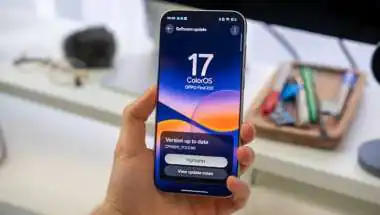
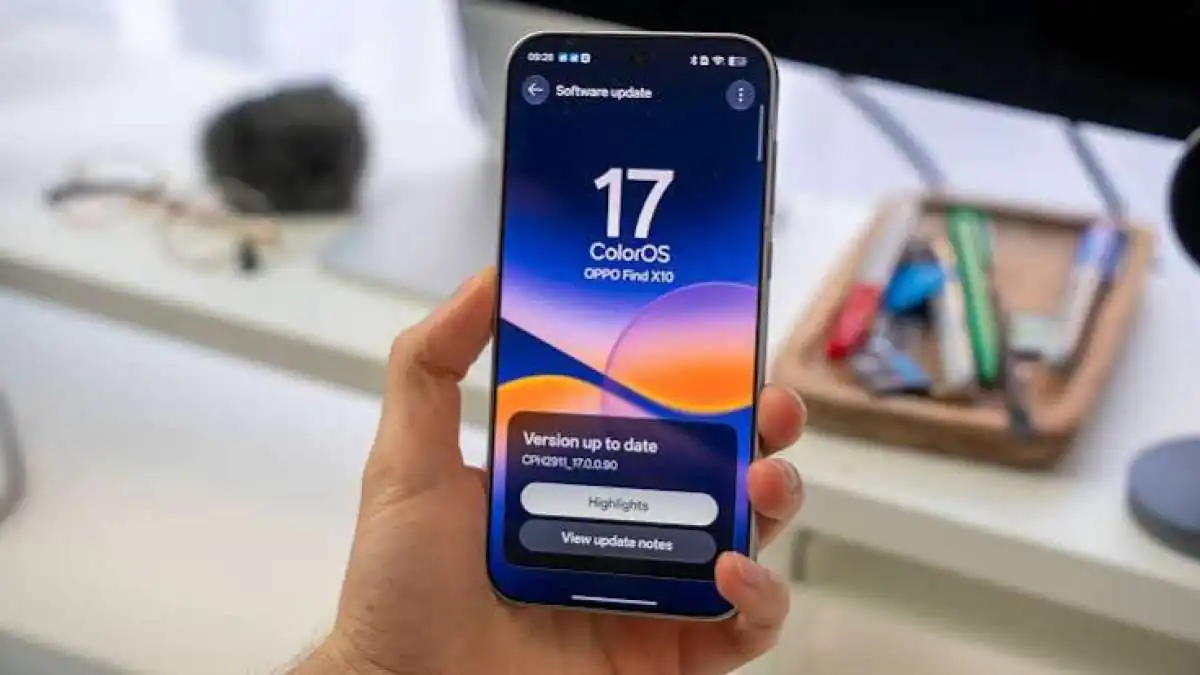
OPPO has officially introduced ColorOS 17 to the global market, marking a significant step forward in its mobile operating system. Announced on October 13, 2026, the update brings a refined user experience centered on fluid motion and system-level artificial intelligence. Built on Android 17, ColorOS 17 debuts first on the upcoming Find X10 Series and will expand to a wide range of OPPO devices in phases throughout 2026 and into early 2027. The company positions the new software under the theme “Silky Smooth. Flow with AI,” highlighting both its smoother interface and expanded intelligent capabilities.
ColorOS has long emphasized animation quality and everyday responsiveness. With this latest generation, OPPO advances that focus through Living Flow Design while adding agentic AI tools that move beyond simple answers to complete multi-step tasks on the device itself. Users can expect improved app stability, faster loading times, stronger background app retention, and long-term performance that holds up over years of use.
Living Flow Design: A New Approach to Everyday Interaction
At the heart of ColorOS 17 sits Living Flow Design, OPPO’s latest visual and interaction framework. Building on Parallel Animation from ColorOS 15 and Seamless Animation from ColorOS 16, this new system aims to make every touch, swipe, and transition feel continuous and natural.
Living Flow Design rests on three core principles: Luminous Effect, Fluid Motion, and Flexible Feedback. Luminous Effect softens visual layers with refined lighting and translucency. Fluid Motion ensures interface elements morph and flow together rather than jumping between states. Flexible Feedback adds tactile physics so buttons, bars, and panels visibly compress, stretch, and rebound in response to pressure and direction of touch.
Do you want to receive news updates on WhatsApp?
Get the latest and most reliable news updates instantly on WhatsApp. Join now and be the first to read every story.
The updated Luminous Rendering Engine and Unified Rendering Architecture reduce rendering loads by up to 30 percent and lower related RAM usage by as much as 25 percent in key scenarios. These efficiencies free system resources while delivering more refined transitions. Everyday moments, such as the clock transforming fluidly from the Lock Screen to the Home Screen, become small visual highlights rather than simple functional changes.
OPPO pairs these visual upgrades with the Laminar Flow Engine. According to company testing, this engine improves app launch stability by 55 percent compared with ColorOS 16. Gallery thumbnails load up to 50 percent faster on first launch, and the system can keep more than 25 percent additional apps running in the background. The result is smoother multitasking when users switch between maps, messaging, music, and photo galleries without constant reloading.
Long-term durability also receives attention. In laboratory simulations of six years of use with storage filled to 90 percent capacity, ColorOS 17 retained over 90 percent of its initial smoothness. OPPO presents these figures as evidence that the experience should remain responsive well beyond the typical upgrade cycle of many smartphones.
System-Level AI That Completes Tasks, Not Just Answers Questions
ColorOS 17 expands OPPO AI into agentic capabilities designed to handle complex, multi-step work. The centerpiece is AI Mind Pilot with its new Agent Mode. Instead of merely responding to prompts, the agent can work directly with photos and files stored on the device, search across multiple sources, select appropriate tools, and coordinate sequential actions based on a user’s request.
Practical examples include locating scattered documents across folders, renaming files according to content and date, sorting travel photos into albums, generating itineraries from tickets and reservations, or creating structured content such as web pages and presentations from existing material. AI Mind Pilot also integrates popular external AI services, allowing users to combine on-device data with broader knowledge sources in one place.
AI Photo Agent receives meaningful upgrades as well. Users can edit images through natural language instructions or rely on automated scene analysis. The new Style Match feature stands out: provide a reference image and the system analyzes its color palette, tone, and overall mood before applying a similar look to the user’s own photo. This approach reduces reliance on manual sliders and presets while aiming to preserve the authentic character of the original scene.
AI Mind Space evolves into a more structured personal memory system. Users can save documents and video links; the AI processes their content into searchable collections that can be retrieved later. Additional tools include OSee, which combines visual understanding into a single camera-triggered experience. One shutter press can trigger object recognition, knowledge lookup, nutrition analysis, high-definition scanning, or translation depending on the scene.
Security features address emerging risks. AI Call Guard monitors calls and video calls for synthetic voices or AI-generated face swaps, alerting users to potential deepfake fraud in real time. A Transparency Report on the device logs which AI services accessed data, the timestamps, and the operations performed, giving users clearer visibility into how their information is handled.
Rollout Timeline and Device Availability
ColorOS 17 arrives first on the OPPO Find X10 Series, scheduled for global launch on October 21, 2026. The broader update then follows a phased schedule. Early waves in late October target the Find N6, Find X9 series (Ultra, Pro, s, and standard models), Find N5, Find X8 series, and the Reno16 lineup. November expands to additional Reno15 and Reno14 models along with selected K and F series devices. Further waves continue through December 2026 and the first quarter of 2027, covering more Reno, F, and tablet models.
OPPO, OnePlus, and realme devices share the ColorOS foundation under the company’s unified software approach. Specific regional timing may vary by market and carrier, so users are encouraged to check official channels for the most accurate schedule applying to their device. The company has published detailed charts on its ColorOS website and social platforms to help owners track eligibility.
Performance claims throughout the announcement rely on OPPO Lab data. Real-world results will depend on individual device configuration, usage patterns, and regional software adaptations. Still, the combination of reduced rendering overhead, stronger background retention, and agentic AI tools positions ColorOS 17 as one of the more ambitious Android skins of the year.
What the Update Means for Daily Use
For most users the benefits will appear in small, repeated moments: faster gallery browsing, fewer app reloads during multitasking, and interface elements that respond with subtle physical feedback. The AI features aim to reduce friction in organizing photos, files, and travel plans without requiring constant app switching or manual sorting.
OPPO’s emphasis on sustained smoothness over multiple years addresses a common complaint about Android devices that feel progressively slower. By claiming retention of more than 90 percent of original performance after simulated long-term use, the company sets a clear expectation for durability. Whether that promise holds across the full device lineup will become clearer as the update reaches mid-range and older models.
The global unveiling also reflects OPPO’s broader strategy of aligning software experiences across its brands. Features developed for flagship Find series devices will gradually reach Reno, K, F, and tablet users, creating a more consistent ecosystem.
FAQ
When does ColorOS 17 launch globally? OPPO unveiled ColorOS 17 on October 13, 2026. It debuts on the Find X10 Series at their global launch on October 21, 2026, followed by progressive rollout starting late October.
Which devices receive ColorOS 17 first? The Find X10 Series ships with ColorOS 17. Early update waves include Find N6, Find X9 series, Find N5, Find X8 series, and Reno16 models in late October 2026.
What is Living Flow Design? Living Flow Design is ColorOS 17’s new interface framework built on Luminous Effect, Fluid Motion, and Flexible Feedback. It delivers softer visuals, continuous transitions, and responsive touch feedback.
What can AI Mind Pilot’s Agent Mode do? Agent Mode works with on-device photos and files to complete multi-step tasks such as organizing documents, renaming files by content, sorting travel photos, and generating itineraries.
Does ColorOS 17 improve long-term performance? OPPO states that in six-year simulated aging tests with storage at 90 percent capacity, ColorOS 17 retains over 90 percent of its initial smoothness.
Is there protection against AI-generated call fraud? Yes. AI Call Guard detects synthetic voices and AI face swaps during calls and video calls, alerting users to potential deepfake scams.