2026 India Wellness Report: Holistic & Preventive Health Trends
Explore key trends from the 2026 India Wellness Report on holistic and preventive health, early NCD risks, Ayurveda growth, sleep recovery and digital care.
Sumitra Editor
Oct 27, 2026 • 11:23 PM 0
L
Lifestyle
NEWS CARD
“2026 India Wellness Report: Holistic & Preventive Health Trends”
Read more onen.aiadda.in/s/ae813f
27 Oct 2026
https://en.aiadda.in/s/ae813f
Copied
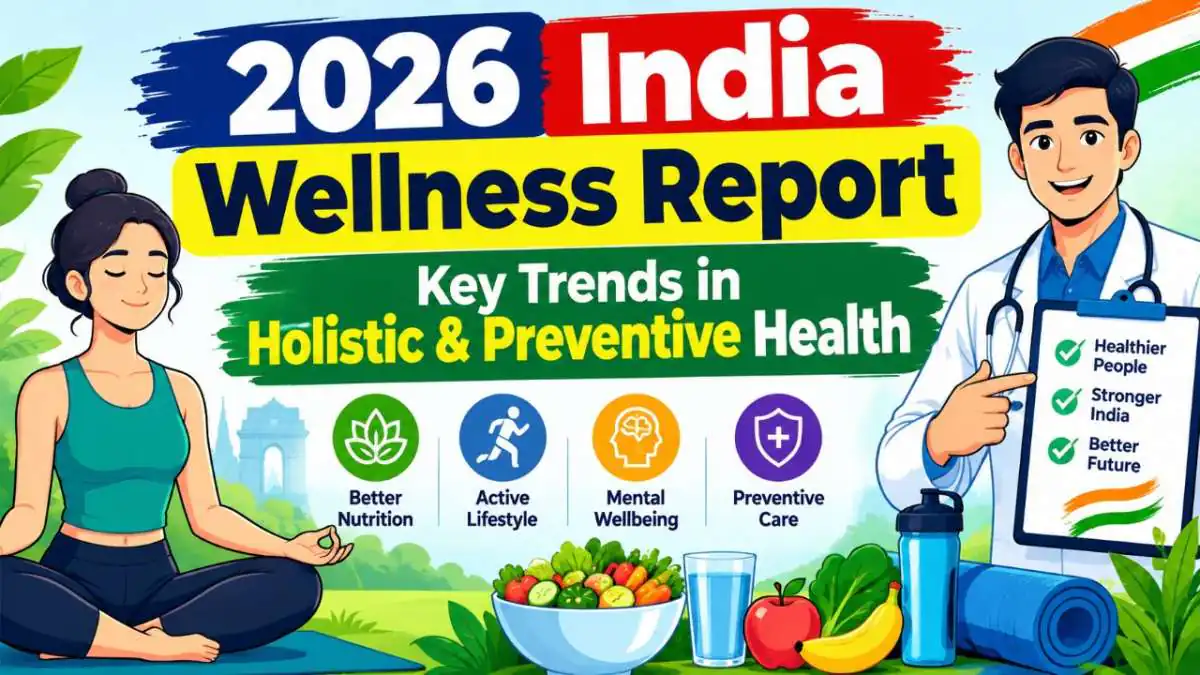
2026 India Wellness Report: Holistic & Preventive Health Trends
India’s health landscape is undergoing a quiet but profound transformation. The year 2026 marks a clear pivot from reactive, symptom-driven care toward proactive, holistic and preventive living. Fresh data from Apollo Hospitals’ Health of the Nation 2026 report, ASSOCHAM-TechSci research, corporate utilisation studies and consumer surveys reveal that non-communicable diseases are arriving earlier, staying hidden longer, and affecting younger populations at scale. At the same time, demand for integrated wellness—spanning Ayurveda, sleep science, hormone health, recovery practices, nutraceuticals and digital monitoring—is rising sharply across metros and Tier-2 cities. This report synthesises the most significant trends shaping India’s wellness economy and public health priorities in 2026.
Early Onset of Chronic Risks Among Young Indians
The Apollo Health of the Nation 2026 report, based on more than three million preventive health assessments conducted in 2025, delivers some of the most striking findings of the year. Nearly one in five people under 30 already show signs of prediabetes. More than half in the same age group are overweight or obese, and close to 70 per cent are deficient in Vitamin D. Abnormal cholesterol levels affect over half of young adults screened, while nearly half register low Vitamin B12. Functional decline—measured through flexibility, strength and balance—begins in the twenties for a substantial share of the population.
In working-age adults with an average age of 38, the picture is equally concerning. Eight in ten are overweight or obese, nearly half have prediabetes or diabetes, and one in four have elevated blood pressure. Mental health screening reveals depression in roughly one in 15 and anxiety in one in 10. Gender-specific patterns also stand out: anaemia remains widespread among women, central obesity is rising, and the mean age of breast-cancer detection through routine mammography is 51—nearly a decade earlier than in many Western populations.
These numbers underscore a critical message. Health risks are no longer the preserve of middle age. They are present, often silent, in young and working populations long before symptoms appear. Early intervention, however, yields measurable results. Among those under 30 who took corrective steps after detection, 28 per cent reversed prediabetes to normal ranges. The corresponding figure for those over 50 drops to just 7 per cent. The data make a strong case for routine, personalised screening starting in the early twenties.
Do you want to receive news updates on WhatsApp?
Get the latest and most reliable news updates instantly on WhatsApp. Join now and be the first to read every story.
The Corporate Shift Toward Continuous Preventive Care
Corporate India is accelerating the move from episodic treatment to continuous health management. According to ekincare’s India Inc. Preventive Health Utilisation Report 2026, annual health-check utilisation rose 48 per cent year-on-year, while doctor consultations surged 2.5 times. Healthcare sector organisations led the increase at 122 per cent, followed by BFSI at 108 per cent and IT and software at 29 per cent.
A generational divide is also visible. Gen Z employees recorded more than double the growth in health engagement over the past two years, outpacing millennials (44.5 per cent) and employees aged 40 and above (30 per cent). Yoga remains the dominant physical-wellness offering across corporate programmes, with adoption ranging from 73 to 90 per cent depending on organisation type. Stress-management sessions and meditation are nearly universal in many firms, especially in BFSI. Preventive healthcare and medical support already rank among the top programmes, with Global Capability Centres reporting 87 per cent adoption.
The corporate wellness market itself is expanding. Estimates place the current market across India’s top six metros at approximately Rs 3,600 crore, projected to reach around Rs 4,000 crore by FY2027. Bengaluru alone accounts for a substantial share, reflecting the density of technology and GCC operations. Employers are learning that one-size-fits-all programmes fall short; GCCs, for instance, prefer off-site physical fitness options but on-campus mental-health sessions. The direction of travel is clear: continuous monitoring, personalised pathways and measurable outcomes are becoming standard expectations.
Holistic Integration of Tradition, Technology and Lifestyle
Holistic health is moving from niche interest to mainstream priority. The ASSOCHAM-TechSci report “Towards a Healthier India: Building a Culture of Preventive & Holistic Wellness,” released at the 4th ASSOCHAM Health & Wellness Summit 2026, projects India’s Ayurvedic products market to grow from USD 8.12 billion in 2024 to USD 22.37 billion by 2030 at an 18.4 per cent CAGR. Medical tourism is expected to expand from USD 9.01 billion to USD 16.76 billion over the same period.
AYUSH infrastructure has reached meaningful national density, with thousands of hospitals and tens of thousands of dispensaries making traditional therapies more accessible. Experts at the Illness to Wellness Summit emphasised the need to scientifically validate traditional knowledge systems and integrate them with modern medicine and digital tools. The combination of evidence-based Ayurveda, yoga, nutrition and contemporary diagnostics is increasingly viewed as a scalable model for both domestic and global demand.
At the same time, everyday wellness conversations have broadened. Sleep quality, physical recovery and hormone health now rank alongside fitness and weight management. Consumers are investing in consistent rest, recovery modalities such as cold plunges and infrared sessions in premium settings, and programmes tailored to hormonal stages including PCOS, perimenopause and postpartum recovery. Protein has moved beyond the gym aisle into everyday snacking formats, and creatine is discussed for recovery and cognitive support rather than solely for muscle gain. The focus has shifted from short-term aesthetic goals to sustainable daily habits that support long-term vitality.
Digital Tools, Wearables and Personalised Prevention
Technology is accelerating the preventive shift. Wearables, AI-driven risk scoring, telemedicine and digital health platforms enable continuous monitoring and earlier detection. Studies suggest AI-enabled continuous monitoring can identify deterioration in chronic conditions weeks or months earlier than traditional periodic check-ups. Engagement with AI coaching tools is reported to be substantially higher than with static wellness apps. Voice-based vernacular AI assistants are proving particularly effective in improving comprehension and uptake among users with lower literacy levels.
Diagnostics data reinforce the trend. Preventive blood testing has grown significantly, with lifestyle and gut-health panels rising even faster. Vitamin D tests remain among the most frequently booked, while thyroid and HbA1c testing show increased adoption, including in Tier-2 cities. Nutraceuticals are riding the same wave: India’s market is projected to expand from roughly USD 29–30 billion in 2024 toward USD 55–57 billion by 2030, with intermediate estimates of USD 37–38 billion by 2026.
Women-centric and personalised care is another fast-growing segment. Demand is rising for hormone health support, fertility services, menstrual wellness, menopause care and stage-specific preventive screenings. Providers are responding with specialised pathways that move beyond traditional maternity focus to lifelong health management for women.
Policy, Economic and Behavioural Drivers
Government programmes continue to expand the foundation for preventive care. Health and Wellness Centres under Ayushman Bharat, the National Programme for Prevention and Control of Cancer, Diabetes, Cardiovascular Disease and Stroke, Tele-MANAS mental-health support, and digital health infrastructure under the Ayushman Bharat Digital Mission all contribute to broader access. Mental-health help-seeking is normalising, with Tele-MANAS handling millions of calls since launch.
Household spending patterns are also changing. Families are reallocating budgets from pure reactive treatment toward detection, prevention, maintenance nutrition, fitness tracking and mental wellbeing. The “feel-good economy”—encompassing wellness services, aesthetics, mental health and even pet care—has matured into a service-led, repeat-demand segment. Consumers increasingly favour maintenance plans over one-time treatments.
Economic arguments strengthen the case for prevention. Improved Health-Adjusted Life Expectancy is linked to substantial gains in GDP per capita. Reducing the NCD burden through early detection and lifestyle intervention is therefore not only a health imperative but an economic one.
Disclaimer
This article is for informational purposes only and does not constitute medical advice. Please consult a qualified healthcare professional for personalised guidance.
FAQ
Q1: What is the most important finding from the Apollo Health of the Nation 2026 report? A1: Nearly one in five people under 30 are already prediabetic, more than half are overweight, and about 70 per cent are Vitamin D deficient, showing that major health risks now begin in early adulthood.
Q2: How fast is India’s Ayurveda market expected to grow? A2: The ASSOCHAM-TechSci report projects growth from USD 8.12 billion in 2024 to USD 22.37 billion by 2030 at an 18.4 per cent CAGR.
Q3: Are corporate employees engaging more with preventive health? A3: Yes. Annual health-check utilisation rose 48 per cent and doctor consultations increased 2.5 times according to the 2026 ekincare report, with Gen Z showing the strongest growth.
Q4: Which wellness areas are gaining attention beyond traditional fitness? A4: Sleep quality, physical recovery practices, hormone health (including PCOS and menopause support), and personalised nutrition are rising rapidly in consumer discussions and service offerings.
Q5: How is technology supporting preventive care in India? A5: Wearables, AI risk scoring, telemedicine, vernacular voice assistants and expanded diagnostics (including gut and lifestyle panels) enable earlier detection and continuous monitoring.